Guide & original data
Sending Flowers to the USA from Europe: A Guide for Families on Both Sides of the Atlantic
How to order a hand-delivered bouquet for someone in America from Denmark, Poland, the UK, Spain or anywhere else in Europe, and where America's 40 million German Americans, 32 million Irish Americans, 8 million Polish Americans and 1.1 million Danish Americans actually live, state by state and county by county.
By Simon Lübic, founder of Quick Flower Delivery 35 min read
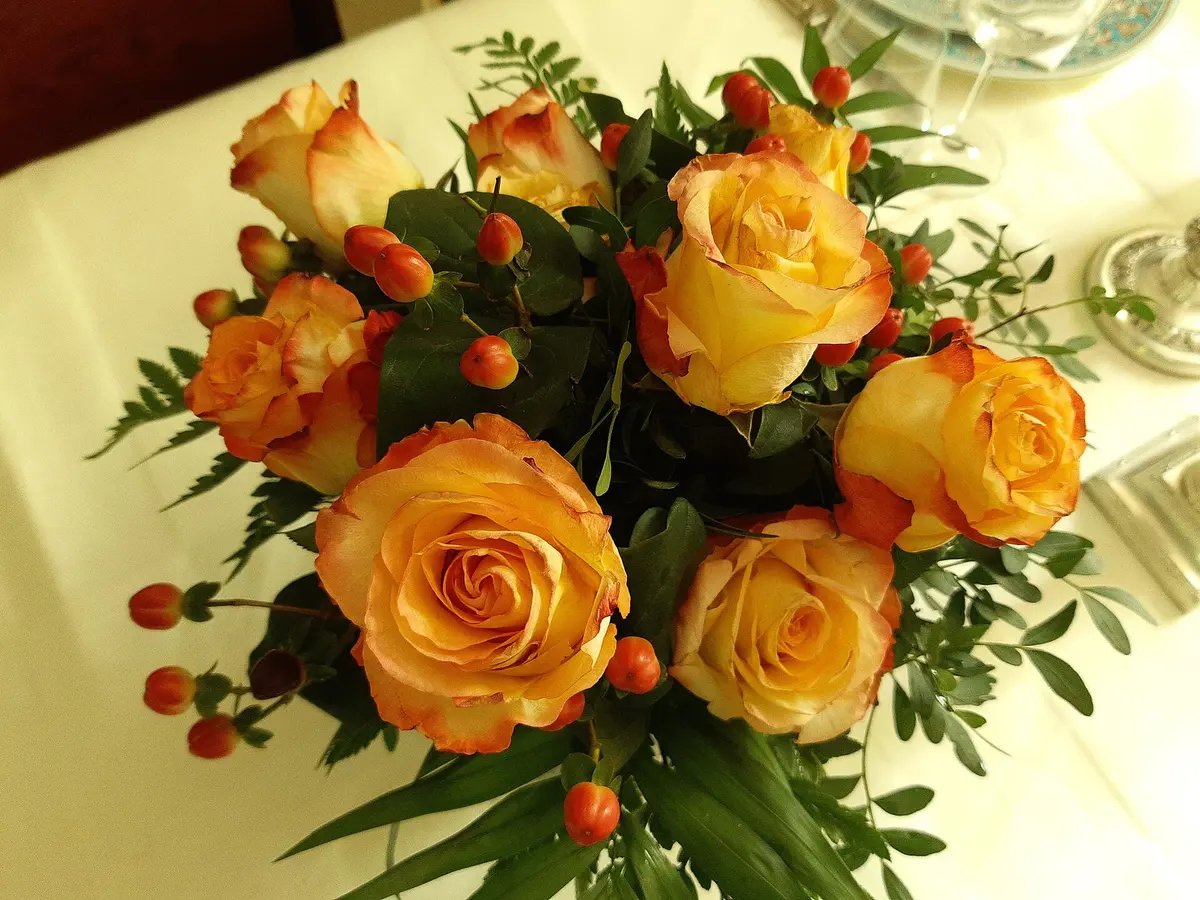

Somewhere in almost every European town there is a family with a branch in America. A great-aunt who married a G.I. and settled in Ohio. A cousin who took a research job in Seattle and never came home. A grandson in Chicago, a goddaughter in Texas, a best friend who followed love to Florida. And a few times a year, on a birthday, an anniversary, Mother's Day or after a loss, someone on this side of the Atlantic wants to put something real into that person's hands.
That is what this guide is about. In the first part we explain, step by step, how you send flowers to the USA from Denmark, Poland, the United Kingdom, Spain, Germany or anywhere else in Europe with Quick Flower Delivery: what you pay, which time to order by, and what actually happens after you click "place order". In the second part we use the newest figures from the U.S. Census Bureau to show where the 4.9 million Americans who were born in Europe live today, the people with parents, siblings and old friends back home, and then where the much larger circle of Americans with European roots is concentrated, state by state and county by county.
"Most of our orders from outside the United States are not really about flowers. They are about a grandmother in Minnesota, a cousin in Chicago or a friend who moved to California ten years ago. Our job is to make the Atlantic disappear for the five minutes it takes to order."
Simon Lübic, founder of Quick Flower Delivery
How to send flowers to the USA from Europe, step by step
Quick Flower Delivery is a U.S. flower delivery service built around one idea: the bouquet should be made close to the person who receives it. You order online from wherever you are. A local florist in or near your recipient's area arranges the flowers by hand and delivers them by hand. Nothing is packed in a box, and nothing is flown across an ocean. The only thing that travels from Europe is your order and your message.
Ordering from abroad works exactly like ordering from inside the United States:
- Choose a bouquet. Browse all bouquets and arrangements, from classic roses to sympathy pieces and birthday flowers. Prices are shown in U.S. dollars.
- Enter the recipient's address in the USA. Street address, city, state and the five-digit ZIP code. If you only know the town, you can look it up first in our directory of every U.S. state, which lists the counties and towns we deliver to.
- Pick a delivery date. Deliveries run Monday to Saturday. If you are ordering for today, see the cutoff times below.
- Write your card message. Up to 200 characters, printed on a card that goes with the flowers. Many of our European customers write in their own language, and for a Danish grandmother in Utah or a Polish uncle in Buffalo, that is often the whole point.
- Enter your own details and pay. Choose your country, then enter your billing address the way it is written at home. You pay with your own credit or debit card, in U.S. dollars, and your bank converts the amount into kroner, złoty, euros or pounds.
When the florist has finished the arrangement, you receive a photo of the actual bouquet at no extra charge. For someone ordering from Aarhus or Gdańsk, who will never see the flowers in person, that photo matters more than almost anything else on this page.
A few honest details, because they are the ones people ask about:
- Flowers can vary slightly. The florist may substitute individual flower types based on what they have available that day. There is no substitution in the type of arrangement: no change in size, shape or value, and the utmost care is taken to keep it as close as possible to the bouquet you chose.
- A delivery charge applies to every order. Several items going to the same address in one order are charged one delivery fee. You see the full amount at checkout before you pay.
- A preferred delivery time can be requested in the delivery instructions, but it cannot be guaranteed. Normal delivery hours are 9:00 AM to 7:00 PM in the recipient's time zone.
- If something is wrong, contact us within three days of delivery. Flowers are perishable, so we need to hear about it quickly. Depending on the situation, we can offer a replacement, a refund or a partial credit.
Same-day delivery from a European time zone
Same-day delivery is possible when the order is placed before 1:00 PM in the recipient's time zone, Monday to Saturday. Around Valentine's Day, Mother's Day, Easter and Christmas the cutoff can be earlier because florists are busier.
This is where living in Europe works in your favor. The United States is six to nine hours behind most of Europe, so the American cutoff falls in your evening. For most of the year, these are the latest times you can order for delivery the same day:
| Recipient lives in | Cutoff, local U.S. time | London, Dublin, Lisbon | Copenhagen, Warsaw, Berlin, Madrid, Paris, Rome | Helsinki, Athens, Kyiv |
|---|---|---|---|---|
| Eastern time (e.g. New York, Florida, Massachusetts) | 1:00 PM | 18:00 | 19:00 | 20:00 |
| Central time (e.g. Illinois, Minnesota, Texas) | 1:00 PM | 19:00 | 20:00 | 21:00 |
| Mountain time (e.g. Utah, Colorado) | 1:00 PM | 20:00 | 21:00 | 22:00 |
| Pacific time (e.g. California, Washington) | 1:00 PM | 21:00 | 22:00 | 23:00 |
Two exceptions are worth knowing. Europe and the United States change their clocks on different weekends, so for roughly two weeks in March and one week around the start of November the gap shrinks by an hour and every time in the table moves one hour earlier. And Arizona and Hawaii do not use daylight saving time at all, so their offset to Europe changes during the summer.
"The time difference is on your side. If you live in Copenhagen or Warsaw, you can order after dinner and still reach someone in California the same day."
Simon Lübic
Why a florist in America beats shipping flowers from home
It is tempting to think that the most personal gift is one that comes from home. With cut flowers, the opposite is true. Fresh flowers sent as a private parcel from Europe to the United States spend days in transit and pass through customs and agricultural inspection. They are likely to arrive tired, if they arrive at all. Boxed "flowers by mail" from a warehouse inside the U.S. is better, but the bouquet still spends a night or two in a carton and arrives as a bundle the recipient has to arrange.
A local florist removes all of that. The arrangement is put together near the recipient and carried to the door. It arrives looking the way a bouquet is supposed to look, in a vase or ready to be placed in one, with your card attached.
"Nothing crosses the ocean except your words. The flowers are arranged a few miles from the person you are thinking of."
Simon Lübic
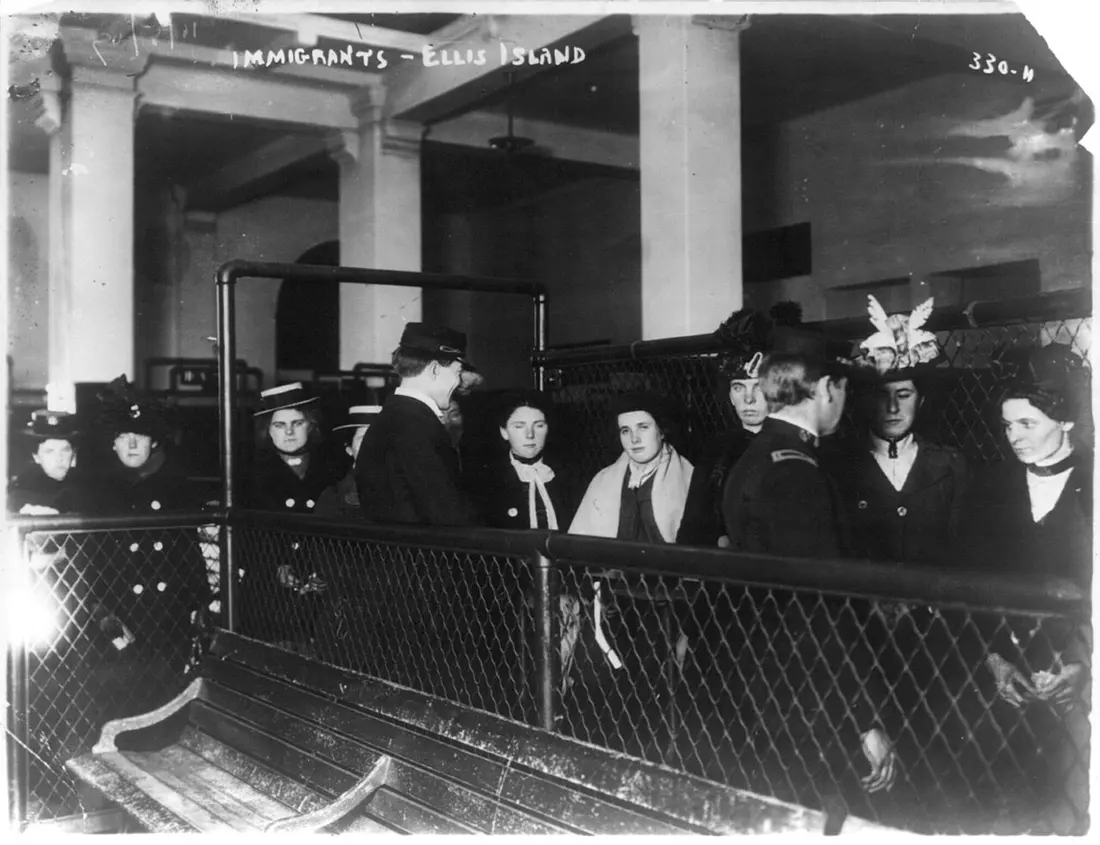
4.9 million Americans were born in Europe: where the first generation lives
The people most likely to receive flowers from Europe are not the great-grandchildren of 19th-century emigrants. They are the ones who moved themselves, and their children: the nurse from Kraków in Chicago, the engineer from Aalborg in Houston, the Spanish teacher in Miami, the Ukrainian family that arrived in Sacramento three years ago. They have parents, brothers, sisters and school friends on the other side of the Atlantic, and those are the people who order.
According to the Census Bureau's 2024 American Community Survey, 4,861,535 people living in the United States were born in Europe. This is a living, recent community: 1,425,365 of them (29 percent) arrived in 2010 or later, and almost half (47 percent) arrived in 2000 or later. Another 988,000 came in the 1990s, after the fall of the Iron Curtain.
Their American-born children, the second generation, add many more. The Census Bureau does not publish the second generation broken down by the parents' country of birth, but it does count the total: in 2025, 44.3 million Americans had at least one parent born abroad. For anyone in that group with a European-born parent, there is usually a grandmother, an aunt or a set of cousins in Europe who would love to send something on a birthday.
The new map: big cities, not small towns
The first generation lives in very different places from the old diaspora. While the most Danish county in America is a valley in rural Utah, Danes who moved to the U.S. themselves are most likely to live in Los Angeles County, Harris County, Texas (Houston) or San Diego County. Today's European immigrants go where the jobs, universities and hospitals are.
The single largest Europe-born community in any county is in Cook County, Illinois: about 235,000 people, many of them Polish, Ukrainian, Bulgarian, Serbian, Bosnian and Lithuanian, in and around Chicago. New York City has even more spread across its boroughs, with Brooklyn alone home to 181,000 Europe-born residents and Queens to 109,000. Los Angeles County (171,000), King County, Washington (75,000, Seattle), Middlesex County, Massachusetts (62,000, Cambridge and the Boston suburbs) and San Diego County (61,000) follow. By state, New York (682,000) and California (681,000) are almost tied, followed by Florida (448,000), Illinois (363,000) and New Jersey (287,000).
The table shows, for each European country of birth, the states and the counties where the largest numbers live today. If you have family who moved to America in the last few decades, there is a good chance they are in one of these places.
Number living in the U.S.: ACS 2024 1-year estimates, table B05006. States and counties: ACS 2020–2024 5-year estimates of the same table. New York City's five boroughs are shown together. Czechia and Slovakia are counted together as "Czechoslovakia" by the Census.
A few patterns stand out:
- The British are the largest group: 682,714 UK-born residents, concentrated in Southern California (Los Angeles, Orange and San Diego counties), in New York, in Houston and in Phoenix. Florida has the second most of any state.
- Ukrainians are the fastest-changing group. 510,016 people born in Ukraine now live in the U.S., many of them arrivals since 2022. The largest communities are in New York City (Brooklyn alone has about 49,000), Cook County (25,000), Sacramento County (19,000), Los Angeles and King and Snohomish counties in Washington.
- Poles remain loyal to Chicago: Cook County has 85,000 Polish-born residents and suburban DuPage County another 14,000. Illinois has twice as many as any other state. In New Jersey, Bergen and Middlesex counties have large Polish communities.
- Germans (519,159) are spread across the Sun Belt and the tech hubs: Los Angeles, Chicago, Phoenix, Orange County, San Diego and Santa Clara County in Silicon Valley.
- Spaniards (136,202) cluster in Miami-Dade County, which has about 10,700, more than twice as many as any other county. Florida is the leading state.
- The Portuguese (150,049) are the exception that proves the rule: they still go where earlier Portuguese emigrants went. Bristol County, Massachusetts has 28,000 Portugal-born residents, followed by Providence County and Union and Essex counties in New Jersey.
- Scandinavians who move today choose the coasts and the energy industry. Danish-born residents are most numerous in Los Angeles, Harris County and San Diego. Norwegian-born residents' top county is Harris County, Texas, Houston's oil and gas hub, with neighbouring Fort Bend County (Sugar Land, Katy) also near the top. Swedish-born residents live mostly in Los Angeles, San Diego, Seattle and Silicon Valley.
- Balkan and Eastern European communities have their own centres: Bosnians in St. Louis County, Missouri and around St. Louis, Albanians in Macomb County, Michigan and New York, Bulgarians, Serbians and Lithuanians in Chicago, and Romanians in Chicago, Los Angeles and Phoenix.
"The old emigrant towns are wonderful, but most of our customers in Europe are sending to a son in Houston, a sister in Chicago or a best friend in Miami. Those are the families who still have someone at home."
Simon Lübic
The wider circle: how many Americans have European roots?
Behind today's first generation stands a much older story. For three centuries, Europe's emigrants built a large part of the United States, and many of their descendants still feel the connection. The Census Bureau's American Community Survey asks every respondent about their ancestry or ethnic origin. Each person can name up to two. In the 2024 survey, Americans named a European ancestry more than 173 million times.
Ancestry is the best available way to count "everyone with roots in a country", across all generations. It includes the recent emigrant, their American-born children and the great-grandchildren of people who came over on a steamship in 1890, as long as they still identify with that origin. The Census does not publish a separate count of second-generation Americans for each European country, so the ancestry figure is the closest thing to "first, second and later generations, added together". Next to it, we show how many people living in the U.S. today were born in each country, which measures the first generation on its own.
A few things stand out:
- German is the largest European ancestry in America, with 40.2 million people. That is close to half the population of Germany itself.
- Americans who report Irish ancestry (32.4 million) outnumber the population of Ireland roughly six to one.
- Almost 3.9 million Americans report Norwegian ancestry, equal to more than two-thirds of Norway's population. 1.1 million report Danish ancestry, close to a fifth of Denmark.
- The United Kingdom is the most common European country of birth among people living in the U.S. today: 682,714 were born there. Germany (519,159), Ukraine (510,016) and Poland (390,226) follow.
- Altogether, 4.86 million people living in the United States were born in Europe.
"When we ran the Census numbers, even we were surprised. More than a million Americans call themselves Danish. That is almost a fifth of Denmark, and every one of them has a birthday."
Simon Lübic
The table below lists every European group we analysed. The last two columns show where each community is most concentrated. That is not necessarily where the most people live: a large state or county will always have more people of every background. The share tells you where a heritage still shapes local life, and where your bouquet is most likely to land on a street full of names from the old country.
| Country of origin | Americans with this ancestry | Born there, living in the U.S. | State with the highest share | County with the highest share |
|---|---|---|---|---|
| Germany | 40,218,028 | 519,159 | Wisconsin (35.8%) | Brown County, MN (56.8%) |
| Ireland | 32,392,581 | 116,641 | New Hampshire (20.6%) | Plymouth County, MA (27.6%) |
| England | 31,017,275 | 298,535 | Utah (28.3%) | Millard County, UT (36.7%) |
| Italy | 16,271,362 | 284,510 | Connecticut (15.3%) | Lawrence County, PA (23.5%) |
| Poland | 8,342,225 | 390,226 | Wisconsin (7.6%) | Portage County, WI (27.8%) |
| Scotland | 6,580,952 | 53,356 | Maine (4.4%) | Carroll County, NH (7.3%) |
| France | 6,128,915 | 179,804 | Maine (11.4%) | Avoyelles Parish, LA (20.5%) |
| Norway | 3,864,701 | 19,842 | North Dakota (20.3%) | Polk County, MN (33.5%) |
| Sweden | 3,251,869 | 45,280 | Minnesota (6.5%) | Chisago County, MN (12.7%) |
| Netherlands | 3,011,733 | 74,774 | South Dakota (3.9%) | Sioux County, IA (40.8%) |
| Wales | 1,532,031 | n/a² | Utah (1.5%) | Wyoming County, PA (4.5%) |
| Portugal | 1,370,146 | 150,049 | Rhode Island (7%) | Bristol County, MA (22.5%) |
| Hungary | 1,277,896 | 59,578 | Ohio (1.3%) | Rockland County, NY (7%) |
| Ukraine | 1,263,837 | 510,016 | Washington (0.9%) | Pettis County, MO (4.2%) |
| Greece | 1,207,425 | 117,468 | New Hampshire (1.3%) | Iron County, MI (1.9%) |
| Czech Republic | 1,200,285 | 67,865¹ | Nebraska (3.6%) | Lavaca County, TX (24%) |
| Denmark | 1,110,484 | 25,182 | Utah (4%) | Sanpete County, UT (11.4%) |
| Spain | 998,504 | 136,202 | New Mexico (3.6%) | Rio Arriba County, NM (12.2%) |
| Switzerland | 861,324 | 38,004 | Utah (1%) | Green County, WI (13.6%) |
| Finland | 612,181 | n/a² | Minnesota (1.6%) | Houghton County, MI (25.3%) |
| Lithuania | 593,350 | 36,300 | Connecticut (0.7%) | Schuylkill County, PA (3.8%) |
| Austria | 575,672 | 37,622 | Wisconsin (0.4%) | Buffalo County, WI (1.8%) |
| Slovakia | 574,325 | n/a² | Pennsylvania (1.2%) | Mahoning County, OH (5.1%) |
| Croatia | 423,617 | 40,180 | Illinois (0.3%) | Plaquemines Parish, LA (4%) |
| Belgium | 312,593 | 38,468 | Wisconsin (0.7%) | Kewaunee County, WI (17.4%) |
| Iceland | 54,446 | n/a² | North Dakota (0.4%) | Walsh County, ND (1.6%) |
| Luxembourg | 47,767 | n/a² | Iowa (0.2%) | Plymouth County, IA (2.5%) |
¹ Born in the former Czechoslovakia, including today's Czech Republic and Slovakia. ² The Census does not publish this country of birth separately. Spain: the "Americans with this ancestry" figure is the Hispanic-origin category "Spaniard", which includes many New Mexicans whose Spanish roots go back to the colonial era. Ancestry, foreign-born and national figures: ACS 2024 1-year estimates. State and county shares: ACS 2020–2024 5-year estimates; counties with fewer than 8,000 residents are left out of the county ranking.
In the sections that follow we go country by country, starting with Denmark. Every state and county is linked to its delivery page, which lists the towns and ZIP codes where our florists deliver.
Denmark: 1.1 million Danish Americans
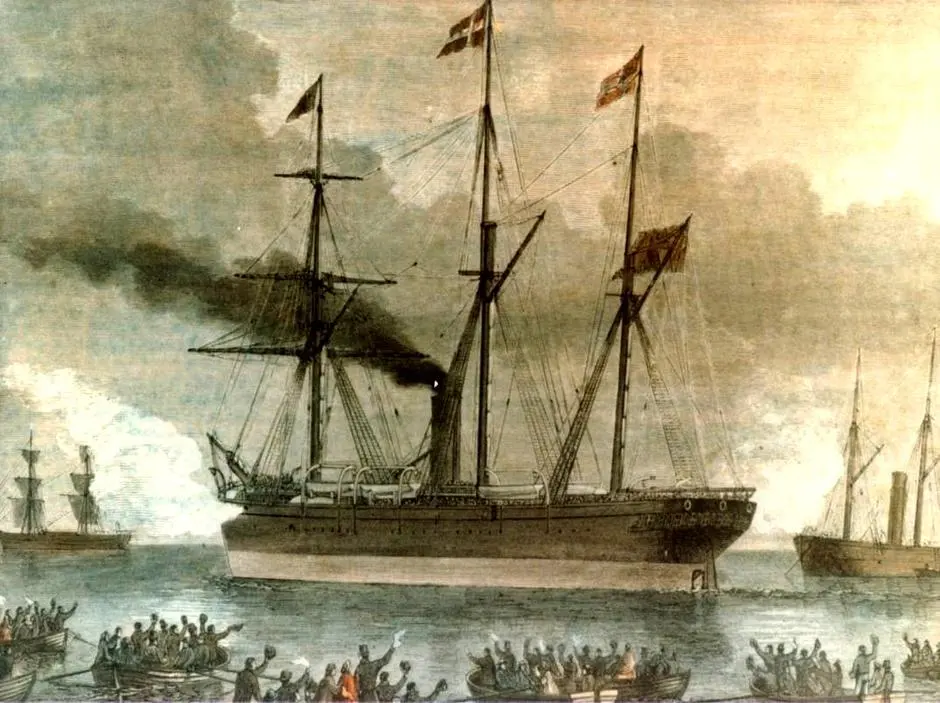
Between the middle of the 19th century and the 1920s, around 300,000 Danes emigrated to the United States. Today 1,110,484 Americans report Danish ancestry and 25,182 people living in the U.S. were born in Denmark. Relative to the size of the home country, it is one of the largest diasporas in Europe.
The Danes who live in America today because they moved there themselves are found in different places from the old settlements described below. California has the most Denmark-born residents (about 5,800), and the counties with the largest numbers are Los Angeles County (1,400), Harris County, Texas (800, Houston), San Diego County (780), New York City, King County, Washington and Santa Clara County in Silicon Valley (around 520 each). If your son, daughter or old friend moved to the U.S. for work in the last twenty years, these are the likeliest addresses.
The older Danish America is a different map. It has two hearts, and they are not where most people expect. The first is Utah. Thousands of Danes who converted to the Church of Jesus Christ of Latter-day Saints in the second half of the 1800s crossed the ocean and the plains to settle in the valleys south and north of Salt Lake City. Their descendants are still there: 4.0 percent of Utahns report Danish ancestry, the highest share of any state, and Utah has about as many Danish Americans as California, which has more than eleven times the population.
The most Danish county in the United States is Sanpete County, Utah, where 11.4 percent of residents report Danish roots. Towns like Ephraim and Manti were settled largely by Scandinavians, and the valley was once known as "Little Denmark". Neighbouring Sevier County (10.7 percent, around Richfield) and Emery County (7.7 percent) are close behind, followed by Box Elder County (6.9 percent, Brigham City), Cache County (6.3 percent, Logan) and Millard County (6.1 percent). By sheer numbers, the largest Danish-American community anywhere is in Salt Lake County, with around 41,000 people, followed by Utah County (33,000).
The second heart is the farm country of the Midwest. In southwest Iowa, Cass County (10.0 percent, around Atlantic) and Shelby County (9.2 percent) are among the most Danish places in America. Elk Horn in Shelby County is home to the Museum of Danish America and to a working windmill that was built in Denmark in 1848, taken apart and rebuilt in Iowa in 1976. Harlan is the county seat. Further west, Nebraska has the second-highest Danish share of any state (1.7 percent), concentrated in Washington County (6.6 percent) around Blair, the former home of the Danish Lutheran Dana College, and in nearby Omaha.
In South Dakota, Turner County (6.2 percent) includes the small town of Viborg, named after the Danish city. In Minnesota, Lincoln County (8.0 percent) is home to Tyler and the Danebod folk-school campus founded by Danish immigrants in the 1880s. Minnesota as a whole has about 61,000 Danish Americans, and Washington about 58,000.
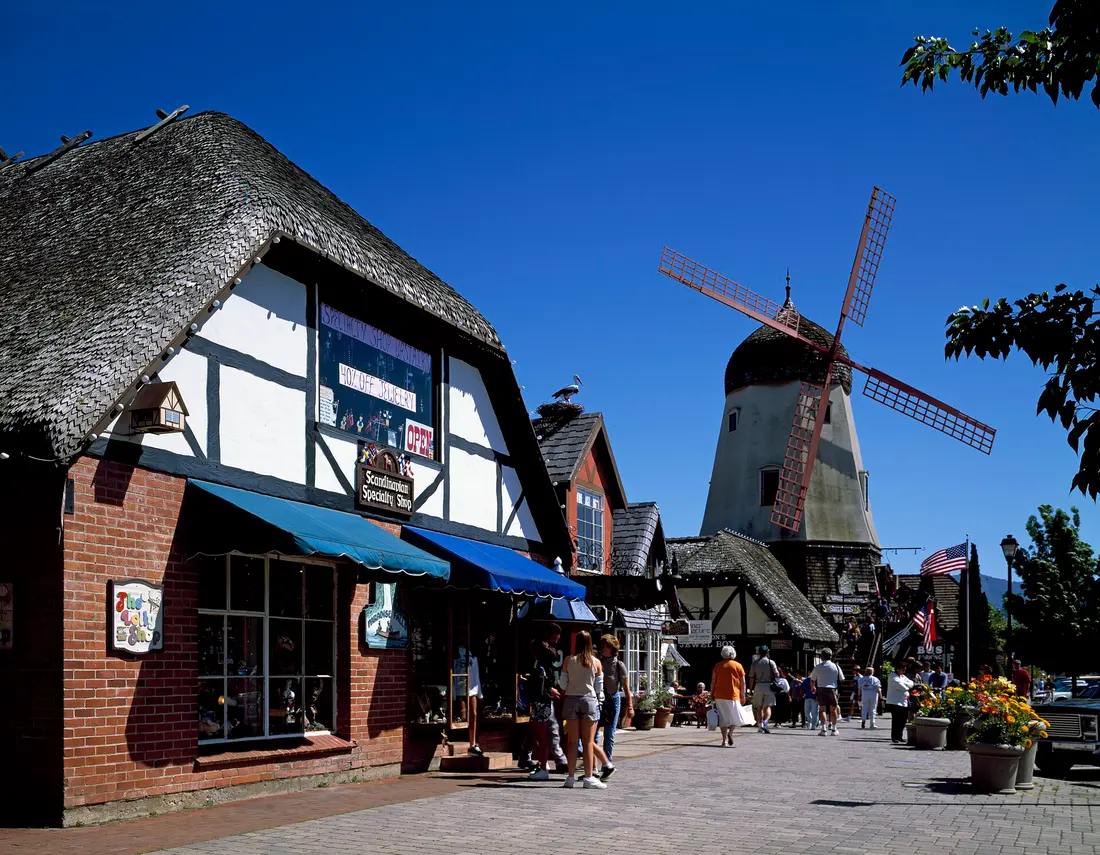
And then there is Solvang, the most photographed Danish town outside Denmark. It was founded in 1911 by Danish Americans from the Midwest in the Santa Ynez Valley of Santa Barbara County, and it still has windmills, half-timbered houses and Danish bakeries. California has the most Danish Americans of any state, about 136,000. Two more places with strong Danish roots: Racine in Racine County, Wisconsin, America's capital of the Danish kringle, and Junction City, Oregon, known for its Scandinavian Festival.
På dansk: 1,1 millioner amerikanere angiver dansk afstamning, svarende til næsten en femtedel af Danmarks befolkning. Den mest "danske" delstat er Utah, hvor 4 procent af indbyggerne har danske rødder. I Sanpete County er det over 11 procent. De danskere, der selv er flyttet til USA i nyere tid, bor især i Los Angeles, Houston, San Diego, New York og Seattle.
Norway, Sweden, Finland and Iceland
Together, Americans report Danish, Norwegian, Swedish, Finnish, Icelandic or simply "Scandinavian" ancestry about 9.8 million times. The upper Midwest is still recognisably Nordic: its churches, its surnames and its Christmas baking.
Norway
Between 1825 and the 1920s, more than 800,000 Norwegians emigrated to America, a larger share of the home population than from any other European country except Ireland. Today 3,864,701 Americans report Norwegian ancestry, and 19,842 were born in Norway. In North Dakota, one in five residents (20.3 percent) has Norwegian roots. In Minnesota the share is 12.1 percent and the number is the largest of any state: around 692,000 people. Norwegians who emigrate today are a different story: the county with the most Norway-born residents is Harris County, Texas, thanks to Houston's oil and gas industry, followed by New York City and Los Angeles.
The most Norwegian counties in the country lie along the Red River Valley and the prairie west of it: Polk County, Minnesota (33.5 percent, around Crookston), Chippewa County (29.9 percent, Montevideo), Roseau County (29.4 percent), Walsh County, North Dakota (29.1 percent, Grafton), Winnebago County, Iowa (28.3 percent) and Yellow Medicine County (27.4 percent). Grand Forks County (24.7 percent, Grand Forks) and Cass County (Fargo, about 48,000 Norwegian Americans) are the urban centres, and Minot hosts the Norsk Høstfest every autumn.
The single largest Norwegian-American community is in Hennepin County, home to Minneapolis, with about 127,000 people, followed by King County, Washington (78,000), where Seattle's Ballard neighbourhood was built by Nordic fishermen and boatbuilders. Across Puget Sound, Poulsbo in Kitsap County still calls itself "Little Norway". In Winneshiek County, Iowa (24.5 percent), Decorah is home to Vesterheim, the national Norwegian-American museum. In Wisconsin, Stoughton in Dane County holds one of the biggest Syttende Mai celebrations outside Norway, and Westby is not far behind.
Sweden
About 1.3 million Swedes left for America between 1850 and 1930, around a fifth of the country's population at the time. 3,251,869 Americans report Swedish ancestry today, and 45,280 residents were born in Sweden. Minnesota leads by far: 6.5 percent of the state, around 370,000 people. Swedish-born residents, on the other hand, live mostly in California: Los Angeles County alone has about 2,800, followed by San Diego, New York City and Seattle.
The most Swedish counties in America sit in the lake country north of the Twin Cities. Chisago County (12.7 percent) is where Vilhelm Moberg set his novels about the emigrants Karl Oskar and Kristina, and Lindstrom and Center City still carry their Swedish heritage openly. Next come Isanti County (12.6 percent, around Cambridge), Carlton County and Pine County (both 11.5 percent) and Koochiching County (11.3 percent).
Beyond Minnesota, Swedish heritage is strong in Lindsborg, Kansas ("Little Sweden USA") in McPherson County; in Holdrege, Nebraska; in Rockford, Illinois (Winnebago County); in Jamestown, New York (Chautauqua County); and in Kingsburg, California, the "Swedish Village" of Fresno County. Cook County, Illinois has about 60,000 Swedish Americans, many of them around Chicago's old Swedish neighbourhood of Andersonville.
Finland
612,181 Americans report Finnish ancestry. Most of their ancestors came to work in the copper and iron mines around Lake Superior, and that is still where Finnish America is concentrated. Houghton County, Michigan is the most Finnish county in the United States: 25.3 percent of residents have Finnish roots, in towns like Hancock and Houghton. It is followed by Gogebic County (19.7 percent, Ironwood), Marquette County (15.8 percent, Marquette), Carlton County, Minnesota (12.7 percent, Cloquet) and Wadena County (11.8 percent). The largest Finnish-American population in a single county is in St. Louis County, Minnesota, home to Duluth and the Iron Range, with about 20,000 people.
Iceland
Iceland's American diaspora is small in absolute terms, 54,446 people, but that is roughly one American for every seven Icelanders. The first Icelandic settlement in the United States was founded in 1855 in Spanish Fork, Utah, in Utah County. The largest share today is in northeastern North Dakota, in Walsh County (1.6 percent) and Grand Forks County, near the old Icelandic settlements of Pembina County around Cavalier. The largest number lives in King County, Washington.
På norsk: Nesten 3,9 millioner amerikanere oppgir norsk avstamning, over to tredjedeler av folketallet i Norge. I North Dakota har hver femte innbygger norske røtter.
På svenska: Över 3,2 miljoner amerikaner uppger svensk härkomst. Flest bor i Minnesota, där 6,5 procent av invånarna har svenska rötter.
Poland: 8.3 million Polish Americans
The Polish diaspora in the United States is one of the largest in the world. 8,342,225 Americans report Polish ancestry, and 390,226 residents were born in Poland. That is about one Polish American for every four or five people living in Poland today. The great wave of emigration came between the 1870s and the First World War, mostly to the industrial cities of the Great Lakes and the coal country of Pennsylvania, and Polish immigrants have kept arriving ever since. Among the 390,226 Polish-born residents, the largest community by far is in Cook County (85,000), with more in DuPage County, New York City and Bergen County, New Jersey.
By numbers, the Polonia's capital is Cook County, Illinois, with about 362,000 people of Polish descent, most of them in and around Chicago. New York (775,000), Illinois (769,000), Michigan (726,000) and Pennsylvania (699,000) are the states with the largest Polish-American populations. Erie County, New York has 137,000, and Buffalo's Dyngus Day on Easter Monday has become one of the biggest Polish-American celebrations in the country. In metro Detroit, Macomb County (111,000), Wayne County (109,000, including Hamtramck) and Oakland County (108,000) together form one of the largest Polish communities outside Poland.
By share, the most Polish county in America is Portage County, Wisconsin, where 27.8 percent of residents have Polish roots, centred on Stevens Point. It is followed by Presque Isle County, Michigan (24.8 percent, Rogers City), Morrison County, Minnesota (16.2 percent, Little Falls), Huron County, Michigan (16.0 percent), Luzerne County, Pennsylvania (15.8 percent, Wilkes-Barre and Hazleton), Bay County, Michigan (15.6 percent, Bay City) and Marathon County, Wisconsin (14.5 percent). As a state, Wisconsin has the highest Polish share (7.6 percent), ahead of Michigan (7.2) and Connecticut (6.3), where New Britain has long been a centre of Polish life.
Po polsku: Według danych amerykańskiego Biura Spisu Ludności (US Census Bureau) ponad 8,3 mln Amerykanów deklaruje polskie pochodzenie. Najwięcej Polonii mieszka w stanach Nowy Jork, Illinois i Michigan, a w hrabstwie Portage w stanie Wisconsin polskie korzenie ma ponad 27 proc. mieszkańców. Spośród 390 tys. osób urodzonych w Polsce najwięcej, ok. 85 tys., mieszka w hrabstwie Cook (Chicago).
Germany, Austria, Switzerland and Luxembourg
Germany
German Americans are the largest European-descended group in the United States: 40,218,028 people, almost one in eight Americans. 519,159 residents were born in Germany. German immigration peaked in the 19th century, when several million Germans settled the farmland of the Midwest and the growing cities along the Ohio and Mississippi rivers. Today's German-born residents are far more urban: Los Angeles County (14,000), Cook County (8,700), Maricopa County (7,500), Orange County and San Diego County (7,000 each) have the most.
The "German belt" runs straight through the middle of the country. Wisconsin has the highest share of any state (35.8 percent), followed by North Dakota (34.5), South Dakota (33.1), Nebraska (31.0) and Iowa (30.5). In some counties more than half the population reports German ancestry: Brown County, Minnesota (56.8 percent), home to New Ulm and its statue of Hermann the German; Sibley County, Minnesota (54.5 percent); Mercer County, Ohio (53.8 percent, around Celina and Coldwater); Putnam County, Ohio (52.3 percent); Carroll County, Iowa (51.6 percent); and Washington County, Wisconsin (50.9 percent), just north of Milwaukee.
Some of the best-known German-American towns lie outside that belt: New Braunfels in Comal County, Texas and Fredericksburg in the Texas Hill Country, both founded by German settlers in the 1840s; Hermann, Missouri, with its German wine heritage; Frankenmuth, Michigan ("Little Bavaria") in Saginaw County; and Cincinnati in Hamilton County, Ohio, whose Over-the-Rhine district was built by German immigrants. In absolute numbers, Pennsylvania has the most German Americans of any state (2.8 million). Maricopa County, Arizona has the most of any county (565,000), a reminder of how many Midwestern families have moved south, followed by Cook County (465,000) and Los Angeles County (418,000).
Auf Deutsch: Rund 40 Millionen US-Amerikaner geben eine deutsche Abstammung an. Das ist die größte europäische Herkunftsgruppe der USA. In Wisconsin sind es fast 36 Prozent der Bevölkerung.
Austria
575,672 Americans report Austrian ancestry and 37,622 were born in Austria. Austrian Americans are spread thinly across the country. The largest communities are in Los Angeles County (14,600), Cook County (13,600) and, on the East Coast, Nassau and Suffolk counties on Long Island and Palm Beach County, Florida. The Lehigh Valley in Northampton County, Pennsylvania has one of the highest shares.
Switzerland
861,324 Americans report Swiss ancestry and 38,004 were born in Switzerland. The most Swiss county in America is Green County, Wisconsin (13.6 percent), where emigrants from the canton of Glarus founded New Glarus in 1845. The county seat, Monroe, is known for its Swiss cheese. In Ohio's Amish country, Holmes County (10.8 percent) includes Sugarcreek, "the Little Switzerland of Ohio", and Millersburg. Adams County, Indiana (9.3 percent) and Lancaster County, Pennsylvania, with the largest number of Swiss Americans of any county (18,500), have roots in the Swiss Mennonite and Amish migrations.
Luxembourg
Luxembourg sent proportionally many emigrants in the 19th century. 47,767 Americans report Luxembourgish ancestry today, most of them in the Upper Midwest: Plymouth County, Iowa (2.5 percent, around Le Mars), Jackson County, Iowa, Dubuque County (Dubuque) and Ozaukee County, Wisconsin.
The United Kingdom and Ireland
British and Irish ancestry runs so deep in American history that many families no longer think of it as "immigrant" heritage at all. Americans report English, Scottish, Welsh, British or Scotch-Irish ancestry almost 43 million times, and Irish ancestry more than 32 million times. But the connection is far from historical only. The United Kingdom is the most common European country of birth in the U.S. today, with 682,714 UK-born residents, and plenty of them have parents, siblings and old friends who send flowers from Manchester, Glasgow, Cardiff or Belfast.
England
31,017,275 Americans report English ancestry, and 298,535 residents were born in England. Those recent arrivals live mainly in Southern California, New York, Houston and Phoenix; the old English heritage, as the county figures show, is strongest somewhere else entirely. The most English state is Utah, where 28.3 percent of residents report English roots, many of them descended from 19th-century converts to the Latter-day Saint church. Millard County (36.7 percent), Cache County (33.1 percent), Juab County and Utah County (both about 33 percent) are among the most English counties in the U.S., alongside Raleigh County, West Virginia (36.5 percent) and Fremont County, Idaho. New England keeps its name honestly: Maine (21.8 percent), Vermont and New Hampshire are all near the top. By numbers, the largest English-American communities are in Maricopa County, Los Angeles County and Salt Lake County (294,000, around Salt Lake City).
Scotland and Wales
6,580,952 Americans report Scottish ancestry and 53,356 were born in Scotland. Another 2.5 million describe themselves as Scotch-Irish, the descendants of Ulster Scots who settled the Appalachian frontier. The highest Scottish shares are in northern New England: Maine (4.4 percent), Vermont and New Hampshire, with Carroll County, New Hampshire (7.3 percent) at the top of the county list. Washington County, Vermont, around the granite town of Barre, drew Scottish stonecutters in the 1800s. In North Carolina, Highland Scots settled the Cape Fear region in the 18th century, and the heritage lives on in Scotland County (Laurinburg) and Moore County (Pinehurst and Southern Pines).
1,532,031 Americans report Welsh ancestry. Welsh miners helped open the anthracite coal fields of northeastern Pennsylvania, and the county ranking still shows it: Wyoming County (4.5 percent), Lackawanna County (3.5 percent, Scranton) and Luzerne County (2.9 percent). Jackson County, Ohio (3.9 percent) is another old Welsh settlement. Utah again has the highest share of any state (1.5 percent).
Ireland
The Irish came in their millions, above all after the famine of the 1840s, and changed the American city forever. 32,392,581 Americans report Irish ancestry, and 116,641 were born in Ireland. The most Irish part of the country is still New England and the Northeast: New Hampshire (20.6 percent), Massachusetts (18.6), Vermont (16.8), Maine (16.5) and Rhode Island (16.1). The Irish-born themselves are most numerous in New York (24,500), especially in Westchester County and New York City, and in Cook County, Middlesex County, Massachusetts and San Francisco.
The most Irish county in the United States is Plymouth County, Massachusetts, on the South Shore below Boston, where 27.6 percent of residents report Irish ancestry. Then come Cape May County, New Jersey (27.1 percent), Barnstable County on Cape Cod (25.2 percent), Rockingham County, New Hampshire (24.7 percent), Gloucester County, New Jersey (24.5 percent) and Rensselaer County, New York (23.7 percent). By numbers, Cook County leads with 433,000, followed by Maricopa County (400,000), Los Angeles County (370,000), Middlesex County, Massachusetts (300,000) and Suffolk County, New York (247,000). Two smaller places with famous Irish traditions: Butte, Montana, the old copper-mining city, and Savannah, Georgia in Chatham County, which holds one of the biggest St. Patrick's Day parades in the country.
The Netherlands, Belgium and France
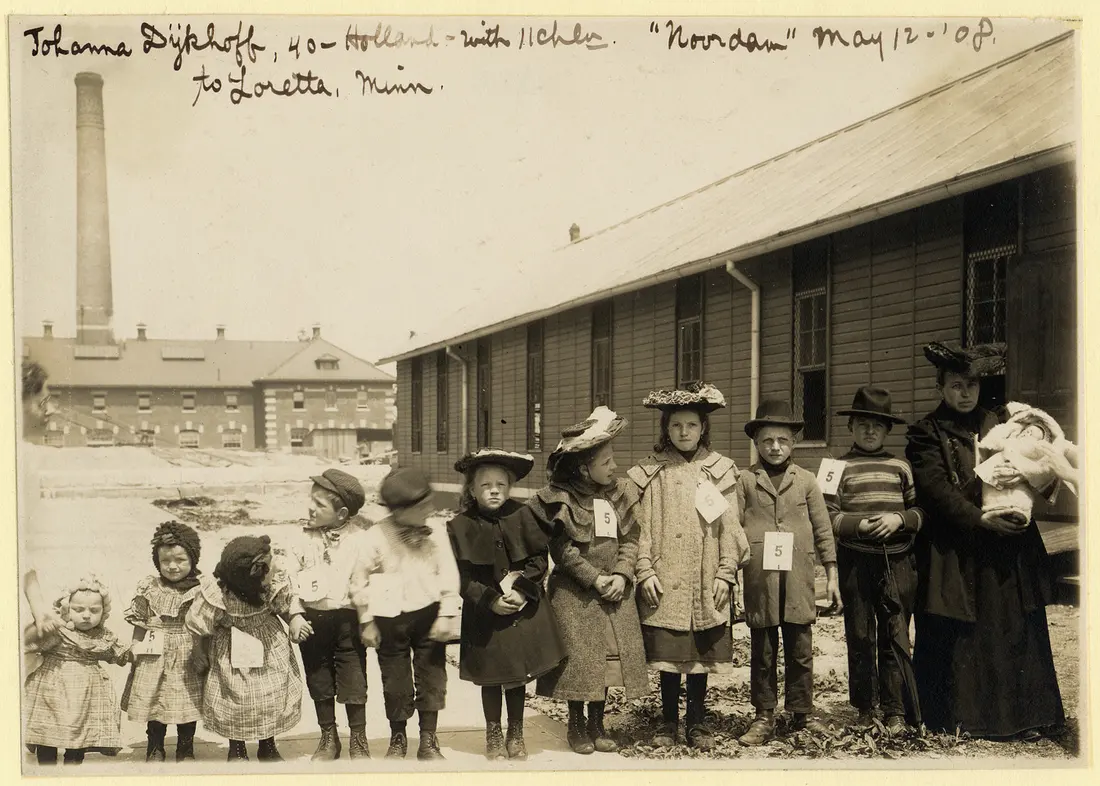
The Netherlands
3,011,733 Americans report Dutch ancestry and 74,774 were born in the Netherlands. Most of the Dutch-born live in California, led by Los Angeles, Orange and San Diego counties. Dutch America is remarkably concentrated. In Sioux County, Iowa, 40.8 percent of residents report Dutch roots. Its towns, Orange City and Sioux Center, were founded by Dutch Reformed settlers, and Orange City's Tulip Festival is a spring fixture. Neighbouring Lyon County (32.5 percent) and O'Brien County (19.0 percent) complete the cluster, while Marion County (18.7 percent) is home to Pella and its own Tulip Time.
The other Dutch heartland is West Michigan. Ottawa County (26.0 percent) includes Holland, whose Tulip Time festival is one of the largest flower festivals in the United States, and Kent County has the largest number of Dutch Americans of any county (95,000), most of them around Grand Rapids. Allegan County (19.2 percent) lies just to the south. In the Pacific Northwest, Lynden, Washington in Whatcom County is another Dutch-founded town.
In het Nederlands: Ruim 3 miljoen Amerikanen geven een Nederlandse afkomst op. In Sioux County, Iowa, heeft zelfs 41 procent van de inwoners Nederlandse wortels.
Belgium
312,593 Americans report Belgian ancestry and 38,468 were born in Belgium. Walloon farmers settled the Door Peninsula of Wisconsin in the 1850s, and it remains the most Belgian corner of America: Kewaunee County (17.4 percent, Kewaunee), Door County (8.9 percent) and Brown County (6.2 percent, or 16,800 people, around Green Bay). Flemish immigrants went to Moline, Illinois in Rock Island County, to Lyon County, Minnesota (7.0 percent) and to the Detroit area, where Macomb County has nearly 10,000 Belgian Americans.
France
6,128,915 Americans report French ancestry and 179,804 were born in France. The French-born live mostly in Los Angeles County (10,900), Manhattan (10,400) and Miami-Dade County (6,100). Many trace their family not directly to France but through Québec and Acadia, which is why French heritage is strongest in two very different places. The first is Louisiana (9.6 percent), the heart of Cajun and Creole culture, where the most French parishes in the country are Avoyelles (20.5 percent), Terrebonne (20.1 percent, Houma), St. Martin (19.6 percent, Breaux Bridge), Lafourche (18.8 percent, Thibodaux) and Lafayette Parish (Lafayette). The second is northern New England: Maine (11.4 percent) and New Hampshire (10.5 percent), with Androscoggin County, Maine (17.2 percent, Lewiston) at the top. Worcester County, Massachusetts has about 69,000 Franco-Americans.
En français : Plus de 6 millions d'Américains déclarent des origines françaises. Dans le Maine, ils représentent plus de 11 % de la population.
Italy, Spain, Portugal and Greece
Italy
About four million Italians emigrated to the United States between 1880 and 1920, most of them from the south of Italy and Sicily. Today 16,271,362 Americans report Italian ancestry, and 284,510 were born in Italy, most of them living in New York City, Nassau County (9,300) and Westchester County (8,000). The Northeast is the Italian-American heartland: in Connecticut (15.3 percent), Rhode Island (14.7), New Jersey (13.7), Massachusetts (11.1) and New York (10.9 percent, or 2.2 million people), more than one in ten residents has Italian roots.
The largest Italian-American community in any county is in Suffolk County, New York, on eastern Long Island, with about 315,000 people (20.6 percent). Next door, Nassau County has 229,000. Staten Island, the most Italian of New York City's boroughs, has an even higher share (22.9 percent). The highest county shares are in Lawrence County, Pennsylvania (23.5 percent, New Castle), Monmouth County, New Jersey (22.5 percent), Gloucester County, New Jersey and Putnam County, New York (both 22.3 percent). Two famous Italian neighbourhoods: Federal Hill in Providence (Providence County) and Wooster Square in New Haven (New Haven County).
In italiano: Oltre 16 milioni di americani dichiarano origini italiane. In Connecticut e Rhode Island sono circa il 15 per cento della popolazione.
Spain
Spain's American story is the oldest of all. St. Augustine, Florida, in St. Johns County, was founded by Spain in 1565 and is the oldest continuously inhabited European-founded city in the continental United States. Today 998,504 Americans identify their origin as Spanish ("Spaniard" in the Census), and 136,202 residents were born in Spain.
Those two numbers describe two different communities. The first is the Hispano population of northern New Mexico, where many families trace their roots to Spanish colonists of the 1600s and 1700s. New Mexico has the highest Spanish share of any state (3.6 percent), and the county ranking is entirely New Mexican: Rio Arriba County (12.2 percent), Taos County (9.5 percent, Taos), San Miguel County (9.1 percent), Cibola County and Santa Fe County (5.4 percent, Santa Fe). Bernalillo County, home to Albuquerque, has about 28,000.
The second is modern Spanish emigration: doctors, engineers, researchers, teachers and their families, many of whom arrived in the last two decades. They live mostly in large metro areas. Miami-Dade County (Miami) has about 10,700 Spain-born residents, more than twice as many as any other county, and Florida has more than any other state. Counting everyone of Spanish origin, the largest communities are in Los Angeles County (34,000), Miami-Dade, Harris County (Houston), Maricopa County and New York City. Tampa's Ybor City in Hillsborough County was built by Spanish, Cuban and Italian cigar workers, and its Centro Español still stands.
The Basques deserve a paragraph of their own. 62,551 Americans report Basque ancestry, the descendants of shepherds who came to the American West. Boise, in Ada County, Idaho, has the famous Basque Block and the largest Basque community in the country, and Elko, Nevada (Elko County) hosts the National Basque Festival every July.
En español: Según la Oficina del Censo de EE. UU., casi un millón de estadounidenses declaran origen español y unas 136.000 personas nacidas en España viven en el país. Desde España se pueden encargar flores que una floristería local de EE. UU. prepara a mano y entrega el mismo día si el pedido llega antes de las 13:00, hora local del destinatario, de lunes a sábado.
Portugal
1,370,146 Americans report Portuguese ancestry and 150,049 were born in Portugal, many of them in the Azores. Portuguese America is concentrated on the southern New England coast. Bristol County, Massachusetts is the most Portuguese county in the U.S. by both measures: 131,000 people, or 22.5 percent of residents. Its two cities, New Bedford and Fall River, grew up around Azorean whalers, fishermen and mill workers. Rhode Island has the highest share of any state (7.0 percent), with Newport County at 11.8 percent and Providence County home to 40,000 Portuguese Americans.
Two more Portuguese Americas exist. In Hawaii (3.2 percent), Madeiran and Azorean contract workers arrived in the late 1800s; Hawaii County (6.0 percent), Kauai County and Honolulu County (23,000, Honolulu) all have strong communities. And in California's Central Valley, Azorean dairy families settled around Turlock in Stanislaus County and Gustine in Merced County (4.8 percent). On the East Coast, Newark's Ironbound district in Essex County, New Jersey is another Portuguese stronghold.
Em português: Mais de 1,3 milhões de norte-americanos declaram ascendência portuguesa. No condado de Bristol, no Massachusetts, são mais de 22 por cento da população.
Greece
1,207,425 Americans report Greek ancestry and 117,468 were born in Greece. The Greek-born live mostly in New York City (Queens alone has 11,300) and in Cook County (7,200). The largest Greek-American community in any county is in Cook County, Illinois (45,000), around Chicago's Greektown, followed by New York City, where Astoria in Queens is the best-known Greek neighbourhood, and Los Angeles County. By share, New Hampshire and Massachusetts lead, with Hillsborough County, New Hampshire (1.8 percent, Manchester and Nashua), Essex County (1.6 percent) and Middlesex County, Massachusetts, where Lowell has a long Greek history. And in Pinellas County, Florida, Tarpon Springs was built by Greek sponge divers from the Dodecanese and still celebrates Epiphany with a dive for the cross.
Czechia, Slovakia, Hungary, Ukraine, Lithuania and Croatia
Czech Republic and Slovakia
1,200,285 Americans report Czech ancestry, plus another 215,000 who answer "Czechoslovakian", and 67,865 residents were born in the former Czechoslovakia. Czech America is rural and surprisingly southern. Texas has the most Czech Americans of any state (186,000), and Lavaca County is the most Czech county in the country: 24.0 percent, around Hallettsville. Neighbouring Fayette County (12.5 percent, La Grange and Schulenburg) and Wharton County (11.2 percent, El Campo) belong to the same "Czech belt", and the small town of West, Texas is famous for its kolaches. Nebraska has the highest Czech share of any state (3.6 percent): Saunders County (14.2 percent), Saline County (11.3 percent), where Wilber calls itself the Czech Capital of the USA, and Colfax County. Cedar Rapids, Iowa (Linn County) is home to the National Czech & Slovak Museum.
574,325 Americans report Slovak ancestry. Slovaks went to the steel and coal towns of western Pennsylvania and northeastern Ohio, and that is where they still are: Mahoning County, Ohio (5.1 percent, Youngstown), Cambria County (4.8 percent, Johnstown), Westmoreland County (4.2 percent) and Fayette County, Pennsylvania. The largest communities are in Allegheny County (34,000, Pittsburgh) and Cuyahoga County (25,000, Cleveland).
Hungary
1,277,896 Americans report Hungarian ancestry and 59,578 were born in Hungary. Ohio has more Hungarian Americans than any other state (153,000) and the highest share (1.3 percent). Cuyahoga County, home to Cleveland, has the largest community (31,000), and the counties around it, Geauga, Medina, Lake and Lorain, all rank among the most Hungarian in the country. In New York's Hudson Valley, Rockland County (7.0 percent) and Orange County (6.3 percent) have the highest Hungarian shares of all, and New Brunswick, New Jersey has a historic Hungarian neighbourhood.
Ukraine
1,263,837 Americans report Ukrainian ancestry, and 510,016 residents were born in Ukraine. That second number is unusual: for most European countries, the people born there are a small fraction of everyone with roots there. For Ukraine it is close to half, because so many Ukrainians have arrived recently. That makes the Ukrainian community one of the groups where flowers from family in Europe matter most right now.
The largest Ukrainian-American communities are in New York City, Cook County, Illinois (38,000), Los Angeles County (31,000), King County, Washington (26,000) and Sacramento County, California (24,000), where Sacramento has one of the largest Slavic communities in the West. Washington has the highest Ukrainian share of any state (0.9 percent). On the East Coast, Bucks County, Pennsylvania (2.0 percent), near Philadelphia, and Hunterdon County, New Jersey have long-established communities, as does Parma, Ohio, with its Ukrainian Village. In the Midwest, Pettis County, Missouri (4.2 percent, Sedalia) has the highest county share in the country.
Lithuania and Croatia
593,350 Americans report Lithuanian ancestry and 36,300 were born in Lithuania. Cook County, Illinois has the largest community by far (32,000), and Chicago has long been called the capital of the Lithuanian diaspora, with more in suburban DuPage and Will counties. The highest share is in the Pennsylvania coal country: Schuylkill County (3.8 percent), home to Shenandoah, once one of the most Lithuanian towns in America.
423,617 Americans report Croatian ancestry and 40,180 were born in Croatia. The biggest communities are in Cook County (15,000) and Allegheny County (13,000, Pittsburgh). The most Croatian county in America may surprise you: Plaquemines Parish, Louisiana (4.0 percent), where Dalmatian immigrants built the oyster industry of the Mississippi delta. Lake County, Ohio (2.4 percent) and Beaver County, Pennsylvania (2.3 percent) follow.
Dates that matter: Mother's Day, Thanksgiving and the rest of the year
When you send flowers across the Atlantic, the date on the American calendar is the one that counts. A few to keep in mind:
- Mother's Day in the U.S. is the second Sunday in May (May 9 in 2027). That is the same day as in Denmark and Germany, but not the same as in the UK (Mothering Sunday, in March or early April), Poland (May 26), Spain (the first Sunday in May), Sweden (the last Sunday in May) or Norway (the second Sunday in February). Because Sunday delivery is not available, order for the Saturday before, and order early: Mother's Day is one of the busiest weeks of the year, and the same-day cutoff can be earlier.
- Thanksgiving is the fourth Thursday in November (November 26 in 2026). For many American families it is the biggest gathering of the year, and a centerpiece arriving on Wednesday or Thursday morning from relatives in Europe is a lovely surprise.
- Valentine's Day (February 14) and Christmas are peak days. Order a few days ahead.
- Birthdays and anniversaries. Remember that Americans write dates month first: 05/09 is May 9, not 5 September. It is worth double-checking when someone has sent you a date by text.
- Sympathy flowers. If you cannot travel to a funeral in the United States, flowers can be delivered to the funeral home or to the family's home. Enter the name of the funeral home in the "Business, hospital or facility name" field at checkout so the florist finds the right entrance and reception.
- Hospitals and care homes. Use the same field for the facility's name, and add the patient's room number if you know it.
Practical tips for ordering from abroad
- Get the ZIP code right. It decides which florist makes your bouquet. If you are unsure, ask the recipient's family, or look up the town in our state directory, where each town page lists its ZIP codes.
- Add a U.S. phone number for the recipient. The florist uses it if nobody answers the door. Your own phone number can be your European number with country code, for example +45 for Denmark, +48 for Poland, +44 for the UK or +34 for Spain.
- Choose your country at checkout and type your billing address the way it appears on your card statement. Postcodes like 2100, 00-950, SW1A 1AA or 28013 are fine.
- Expect a currency conversion. You pay in U.S. dollars. Your card issuer converts the amount and may add its own foreign-transaction fee. If your bank's fraud filter blocks a payment to an American shop, approving it in your banking app usually solves it.
- Write the card the way you would speak. A line in Danish, Polish or Spanish says more than a translated greeting ever could. Keep it under 200 characters.
- Use the delivery instructions for things the florist should know: a gate code, "leave with the neighbour", or that it is a surprise.
- Watch your inbox for the photo of the finished bouquet. It is the next best thing to being there.
For journalists: quotes and figures you can use
You are welcome to quote the figures and statements on this page and to reuse our chart, as long as you credit Quick Flower Delivery and link to this article. Below are ready-to-use statements in several languages, and quotes from our founder. If you need a figure for a specific state, county or ancestry group that is not on this page, write to info@quickflowerdelivery.com.
Quotes from Simon Lübic, founder of Quick Flower Delivery
"Most of our orders from outside the United States are not really about flowers. They are about a grandmother in Minnesota, a cousin in Chicago or a friend who moved to California ten years ago."
"Nothing crosses the ocean except your words. The flowers are arranged a few miles from the person you are thinking of."
"When we ran the Census numbers, even we were surprised. More than a million Americans call themselves Danish. That is almost a fifth of Denmark, and every one of them has a birthday."
"Somewhere in almost every European town there is a family with a branch in America. We would love for local newspapers to use these numbers to tell those stories."
Key figures in your language
Dansk: 1,1 millioner amerikanere angiver dansk afstamning, svarende til næsten en femtedel af Danmarks befolkning, og omkring 25.000 personer i USA er født i Danmark. Med Quick Flower Delivery kan man bestille blomster hjemme fra Danmark og få dem bundet og bragt ud af en lokal blomsterhandler i USA. Levering sker samme dag, hvis bestillingen er inde før kl. 13 lokal tid hos modtageren (mandag til lørdag), og det meste af året kan man bestille helt op til kl. 22 dansk tid og stadig nå levering samme dag i Californien.
Polski: Ponad 8,3 mln Amerykanów deklaruje polskie pochodzenie, co odpowiada mniej więcej jednej piątej ludności Polski. Z Polski można zamówić kwiaty, które lokalna kwiaciarnia w USA ułoży ręcznie i dostarczy osobiście, tego samego dnia, jeśli zamówienie wpłynie przed godz. 13:00 czasu lokalnego odbiorcy (od poniedziałku do soboty).
Español: Casi un millón de estadounidenses declaran origen español, y 136.202 personas nacidas en España viven en Estados Unidos. Nuevo México es el estado con mayor proporción: el 3,6 % de su población.
Deutsch: 40,2 Millionen US-Amerikaner geben eine deutsche Abstammung an, fast die Hälfte der Einwohnerzahl Deutschlands. 519.159 Menschen in den USA wurden in Deutschland geboren.
Svenska: Över 3,2 miljoner amerikaner uppger svensk härkomst. Det mest svenska countyt i USA är Chisago County i Minnesota, där Vilhelm Mobergs utvandrarromaner utspelar sig.
Norsk: Nesten 3,9 millioner amerikanere oppgir norsk avstamning. I Polk County i Minnesota har en av tre innbyggere norske røtter.
Suomi: Yli 600 000 amerikkalaista ilmoittaa suomalaisen syntyperän. Michiganin Houghtonin piirikunnassa suomalaiset juuret on joka neljännellä asukkaalla.
Nederlands: Ruim 3 miljoen Amerikanen geven een Nederlandse afkomst op. In Sioux County, Iowa, heeft 41 procent van de inwoners Nederlandse wortels.
Italiano: Oltre 16 milioni di americani dichiarano origini italiane. La comunità più numerosa vive nella contea di Suffolk, a Long Island: circa 315.000 persone.
Português: Mais de 1,3 milhões de norte-americanos declaram ascendência portuguesa, e 150.049 nasceram em Portugal.
Français : Plus de 6 millions d'Américains déclarent des origines françaises, dont près de 10 % de la population de la Louisiane.
Europe: 4.86 million people living in the United States were born in Europe, and 29 percent of them arrived in 2010 or later.
United Kingdom: The UK is the most common European country of birth among people living in the United States: 682,714 U.S. residents were born there.
Ireland: 32.4 million Americans report Irish ancestry, roughly six for every person living in Ireland today.
Frequently asked questions
Can I order flowers for the USA if I live in Europe?
Yes. Choose your country at checkout, enter your billing address as it is written at home and pay with your own card. The bouquet is made and delivered by a local florist near your recipient in the United States.
Which currency will I pay in?
All prices are in U.S. dollars, and your card is charged in dollars. Your bank converts the amount into your own currency and may add its own fee.
Can the flowers arrive on the same day?
Yes, Monday to Saturday, when you order before 1:00 PM in the recipient's time zone. From Central Europe that usually means 19:00 for the East Coast and 22:00 for the West Coast. Before major holidays the cutoff can be earlier.
Do you deliver on Sundays?
No. Deliveries run Monday to Saturday, normally between 9:00 AM and 7:00 PM. For an occasion that falls on a Sunday, such as Mother's Day, order for the Saturday before.
Will the bouquet look exactly like the picture?
It will be the same type, size and value of arrangement. Individual flowers may be substituted depending on what the local florist has that day, and they take the utmost care to keep it as close as possible to what you ordered. You receive a photo of the actual bouquet once it is finished.
Can I send flowers to a hospital or a funeral home?
Yes. Enter the name of the hospital, care home or funeral home in the facility field at checkout, together with a room number or the name of the deceased if relevant.
What if something goes wrong?
Contact us within three days of delivery. Depending on what happened, we can offer a replacement, a refund or a partial credit.
Sources and method
All figures come from the U.S. Census Bureau's American Community Survey (ACS), downloaded from the Census Bureau's summary files in November 2026.
- Ancestry (all generations): table B04006, "People reporting ancestry". National totals use the 2024 1-year estimates. Respondents can report up to two ancestries, so the groups add up to more than the population.
- Spanish origin: table B03001, Hispanic or Latino origin, category "Spaniard".
- Born in each country (first generation): table B05006, "Place of birth for the foreign-born population", 2024 1-year estimates. Finland, Iceland, Wales, Slovakia and Luxembourg are not published separately.
- Year of arrival: table B05007, "Place of birth by year of entry", 2024 1-year estimates.
- Second generation: Current Population Survey, Annual Social and Economic Supplement 2025, generation table 1 (native-born with at least one foreign-born parent). It is not published by the parents' country of birth.
- States and counties: 2020–2024 5-year estimates of the same tables, which cover every state and county. Shares are the number reporting an ancestry divided by the total population of the area. In the county rankings, counties with fewer than 8,000 residents are left out, because the survey's margins of error are too wide there.
Historical emigration figures are rounded estimates from standard histories of each country's emigration. You can explore the underlying tables yourself at data.census.gov.